Enter a keyword below to search for articles and products.
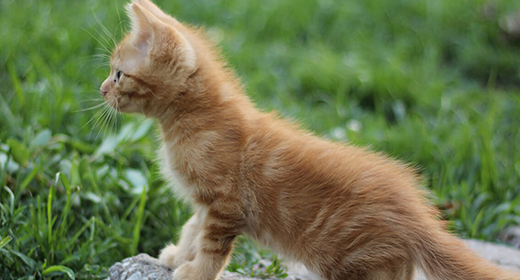
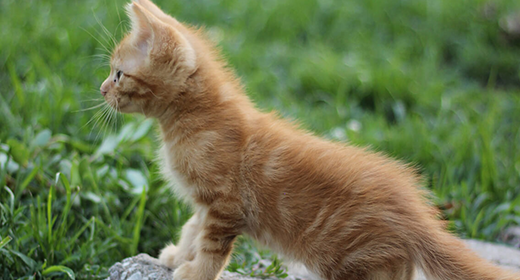
With all of the different kitten food options and ingredients available, it’s important to learn what your kitten needs and what is less essential. You may have heard of flaxseed meal, an ingredient included in some wet cat foods. Is flaxseed meal, a source of omega-3 fatty acids, a necessity for your kitten?
Learn more about this ingredient and how it can affect your kitten’s health for the better.
Flaxseed meal is the ground seed of the flax plant. The oil in flax is a good source of omega-3 fatty acids like alpha-linoleic acid, which is the parent compound of other omega-3 fatty acids.
In kitten and cat food, flaxseed meal is used to provide omega-3 fatty acids to give a balance of omega-6 to omega-3 fatty acids in the diet. IAMS research shows that balancing the amount of omega-6 and omega-3 fatty acids helps maintain a healthy skin and coat.
Including omega-3 fatty acids like alpha-linoleic acid in a kitten’s diet can help:
Alpha-linolenic acid may be an essential omega-3 fatty acid; however, it may take several generations for the signs of deficiency to become evident in a cat. When choosing a wet food, consider one that contains flaxseed meal to help maintain your kitten’s health during this time of rapid growth and development. IAMS™ Perfect Portions™ Healthy Kitten Pate with Chicken is formulated with omega-3 sources, including flaxseed meal, to provide guaranteed levels of omega-3 fatty acids.
Fiber isn’t just for humans — it’s an important part of balanced nutrition for cats, too!
But how much fiber do cats need, what kinds should they be eating and how can you make sure they’re getting the right amount for their bodies?
Cats and humans both need fiber in their diets, but that doesn’t mean cats should be eating the same amount as humans. People are growing more aware of the importance of fiber in our own diets today — and while it’s good to think about your cat’s fiber intake too, it’s important to remember that cats have different dietary needs than humans.
Cats have a much shorter digestive tract than humans, and unlike humans, cats are carnivorous, so their nutritional needs are better satisfied with mostly animal-based ingredients rather than plant matter.
Nondigestible fiber supports cat health by providing bulk that helps move food through the digestive system. This fiber is largely made up of carbohydrates that cats can’t break down in the same way they digest protein or fat. This undigested matter helps usher food through your cat’s system at a healthy pace that lets them absorb the nutrients in their food and eliminate waste comfortably. Higher levels of nondigestible fiber can even help address specific conditions like frequent hairballs.
Fiber can’t be broken down and digested like proteins and fats, but some kinds can be fermented (broken down by bacteria) in your cat’s digestive system. This breakdown produces short-chain fatty acids, which provide energy to your cat’s intestines as it is fermented.
Fiber sources used in pet foods include cellulose, which is poorly fermentable; beet pulp, which is moderately fermentable; and gums and pectin, which can be highly fermentable. Appropriate levels of moderately fermentable fiber, such as beet pulp, provide the benefits of energy for the intestinal lining and bulk without the negative effects of excessive stool or gas. That makes them ideal for the health and comfort of most cats!
While a high-fiber diet can be part of a weight-loss solution for humans, our research has found that it’s not as helpful as a weight-reduction option for cats.
High levels of poorly fermentable fiber in cat food dilute the calories and nutrients in a serving and may make your cat feel fuller. Unfortunately, high fiber content can also increase the rate at which food passes through your cat’s digestive tract, making it harder for them to digest other nutrients in their food. They may be going to the litter box more often, but that doesn’t mean their digestive system is working more efficiently.
When choosing a pet food, remember that cats and humans need different things from their food. All IAMS™ cat food products are made with the right amount of moderately fermentable fiber needed to promote intestinal health. Use the IAMS™ Cat Food Selector to find a recipe tailored to your cat’s unique needs.