Enter a keyword below to search for articles and products.
Before you assume that by-products in kitten food are a bad thing, here are some facts. In common usage, a by-product is something that is just that—a side product from the making of another product. By-products are not by definition poor quality. For instance, gingerbread cookies wouldn’t be the same without molasses, which is a by-product of sugar manufacture.
In relation to IAMS™ kitten and cat foods, by-products are generally parts of the animals that are not the muscle meat preferred by most consumers. The term refers only to the anatomic parts included, not to the nutritional quality of the parts.
While many may not be used to eating these animal parts themselves, it is important to realize that many of the items included in by-products (e.g., organ meats) may be higher in essential nutrients—amino acids, minerals, and vitamins—as well as more palatable to pets than the skeletal muscle meat.
In addition to nutritional benefits, inclusion of these ingredients in pet foods reduces waste and likely has environmental benefits as the livestock industry does not have to produce additional animals just to satisfy the needs for muscle meats to feed pets as well as people. Feeding these nutrient-rich, tasty parts to pets may prevent them from being wasted.
Much of the consumer confusion and discomfort surrounding by-products most likely stems from the marketing strategies of some pet food brands and perhaps from the ingredient name “by-product” itself.
It is important to keep in mind that most ingredients in pet foods can vary greatly in quality. In addition, quality cannot be assessed purely on the basis of the ingredient list. All by-products are not the same quality. Neither is all muscle meat. There are very high-quality by-products as well as poor-quality chicken and chicken meal.
Purchasing food only from reputable manufacturers who are very selective about their suppliers, have full-time, qualified nutritionists, and perform analytical testing to ensure that every ingredient, as well as the finished product, meets their exact nutrient specifications, will help avoid problems due to poor-quality ingredients.
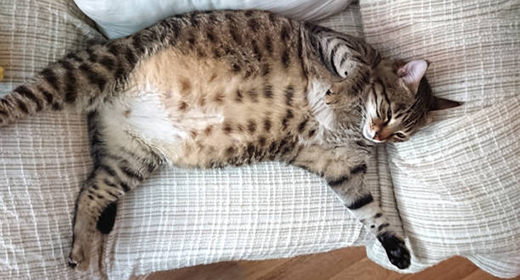
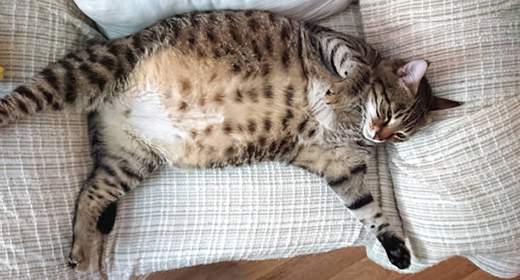
Pregnancy and nursing are responsible for many changes in a cat's lifestyle, as well as in her body. You should pay special attention to your cat’s changing nutritional needs throughout the entire reproduction process.
If you are planning to breed your female cat, it is important to assess her body condition well in advance. Because of the physical demands of pregnancy and nursing, starting off with less-than-ideal health can cause problems.
An underweight cat often can't consume enough food to support her and the developing kittens. Overweight cats may experience abnormal or difficult labor because of large fetuses.
A complete and balanced diet that supports a healthy weight and body condition before breeding helps the female cat maintain her health, and that of her offspring, throughout pregnancy and nursing.
The gestation period for cats is nine weeks. Pregnant cats, like humans, gain weight gradually throughout pregnancy. The energy requirements of pregnant cats are reflected by their weight gain. The energy needs of a pregnant cat should gradually increase so that, by the end of pregnancy, the cat is consuming 25% to 50% more than her normal amount of calories.
Pregnant cats lose weight after giving birth. However, their nutritional needs increase dramatically. Energy needs can be two to three times normal, depending on litter size, in order to produce the milk supply that will support the offspring. Water intake is also important for milk volume.
To ensure a nursing cat is getting enough nutrition, give her a nutrient-dense diet, such as kitten food. Without increasing the amount of food at each meal, increase the number of meals in the day. Free-choice feed her, offering unlimited access to dry food.
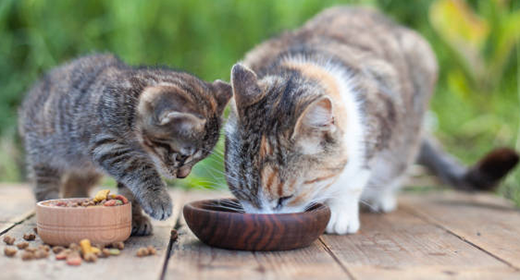
By 5 weeks, most kittens show an interest in their mother's food. Gradually, the kittens will begin eating solid food and nursing less. At the same time, the nursing cat will usually start eating less. Most kittens are completely weaned by eight weeks after birth. By this time, the mother's energy requirement is back to normal and she should be eating her usual pre-pregnancy diet.