Enter a keyword below to search for articles and products.


This article is part of a series on how to spot signs of a healthy cat. You can learn more about the key signs here.
Assessing your cat’s body condition is an important step in evaluating their overall nutritional well-being. Particularly in cases where your cat appears to be obese or thin, it is important to evaluate their total health before consulting a vet for a proper nutritional management program. Look for the following signs that your cat is overweight, underweight or just the right size.
Thin Cat
Underweight Cat
Ideal-weight Cat
Overweight Cat
Obese Cat
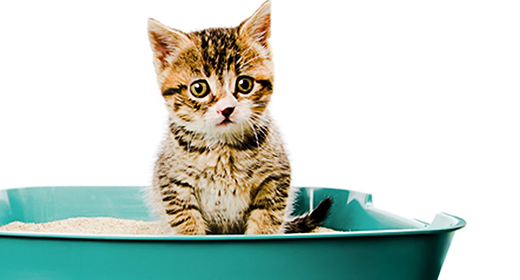
Caitlin Lewis, Community Outreach Manager for the Humane Society of Greater Dayton, dispels common myths about litter-box training for cats. In addition, she shows what and what not to do to help get your cat using the litter box as quickly as possible.
Hi, I'm Caitlin Lewis, Community Outreach Manager for the Humane Society of Greater Dayton on behalf of IAMS. Today we're going to learn how to train—or retrain—your cat to use the litter box. Contrary to popular belief, mother cats do not teach their kittens to use the litter box. Kittens begin to dig in and use dirt and dry, loose material at just a few weeks old without ever having observed their mothers doing so. This natural instinct is used in training kittens to use the litter box. Until your cat is reliably house trained, she should not have free run of your home. When you leave the house for any length of time, your cat should be confined to a single room, preferably one with nonporous floors, such as a kitchen, bathroom, utility room, basement or garage. Provide your cat with a bowl of water and a warm place to sleep at one end of the room, and a freshly clean litter box at the other end.
Until the house soiling has been cured, your cat should have a regular feeding schedule so she will develop a corresponding litter box schedule. In order to reward your cat for using her litter box, you must be there at the time she uses it. Most cats, especially kittens, will need to go shortly after waking, after eating, and after exercise. To help predict when your cat will go, feed her at regular times. If the input is on a regular schedule, the output will follow likewise. Call her to the litter box from a variety of places around your house, especially areas where she has soiled. When your cat gets to the box, scratch the litter to get her interested. Similarly, throughout the day, whenever your cat has been asleep for over two hours, wake her up and call her to the litter box. Encourage your cat to hop into the litter box and praise her when she does so. Even if she does not go, she's learning that the litter box is a great, clean place to be. If your cat does use it, then praise her in a gentle voice. When she is finished, gently stroke her, give her a treat, and let her know how pleased you are with her behavior. If mistakes occur, pick up the cat and set her down in the box. Do not discipline just before placing the cat in the box. The cat will associate any reprimand with being placed in the litter box, and will assume the litter box is the wrong place to go. Punishing a cat after the fact teaches her to be afraid of you. Never rub your cat's nose in a mess, or bring her over to it for a reprimand. She will have no idea why she's being reprimanded. But she may be inclined to eliminate in hidden spots, such as behind the sofa, to avoid another reprimand. Basically, punishment doesn't work with cats. Prevention and praise for getting it right are the keys to training. Clean any accidents immediately with half and half solution of white vinegar and water. This will help to eliminate the odor, and hopefully prevent kitty from returning to that spot. Consider covering the area with a plastic sheet; this will make it unpleasant for your kitty and discourage her from going there again. When your cat is still learning to use the box, leave a tiny bit of urine or feces behind in the box. The scent will remind her what the box is for. As soon as she is using the box reliably—and this could be as quickly as a day or two—remove all liquid and solid waste regularly. Scoop out solid material once or twice a day, and stir the litter to keep the surface dry. If your cat is having trouble using or finding the litter box, move it to an area where she can start seeing it all the time. When she stops playing and start sniffing or scratching at the floor, gently place her in the litter box. If your cat or kitten suddenly stops using the litter box for no obvious reasons, then take your cat to the veterinarian as soon as possible. Once your cat gets into the hang of finding the litter box and using it, they should have this skill for life. Now, let's recap. Provide your cat with a clean litter box that's easy to access. Get her interested in the litter box by scratching the litter. Reward your cat for using her litter box immediately after she uses it. And remember, prevention and praise are the keys to training. Punishment does not work with cats. I'm Caitlin Lewis on behalf of IAMS.