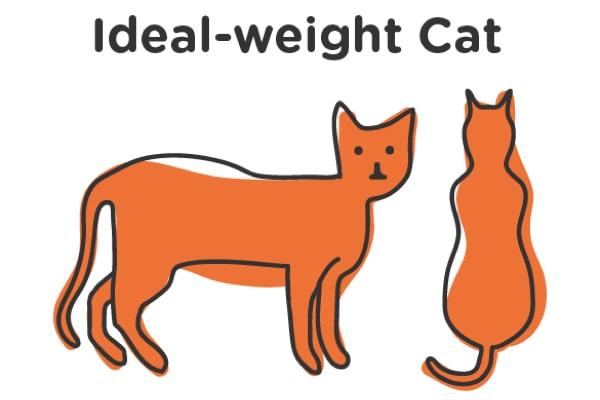
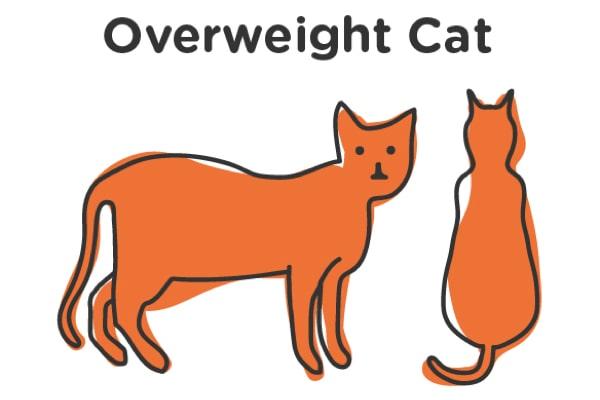
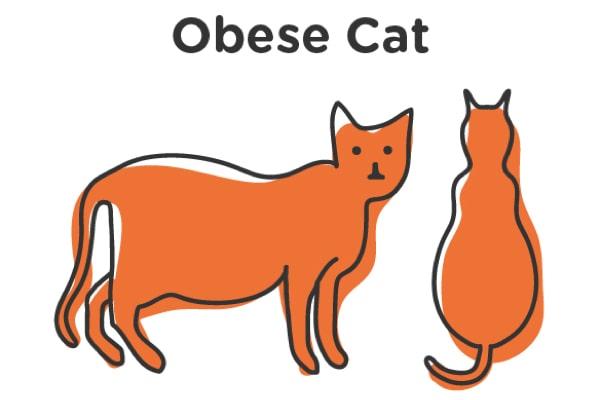
Mature cats need the same kinds of nutrients as younger adult cats, but as their metabolism slows, the quantities of those nutrients and the ways in which they are provided may need to change. Each cat is different, so ask your veterinarian for dietary recommendations based on your cat's physical condition.
Here are some special dietary concerns of mature cats:
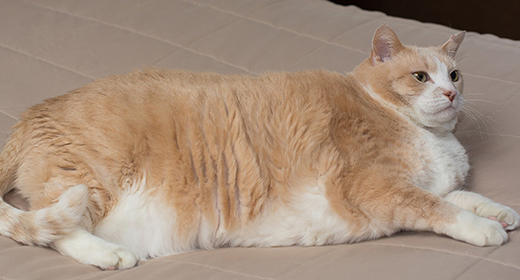
- Obesity. Cats tend to gain weight as they age and become less active. Those between the ages of 7 and 9 are at the highest risk of becoming obese, making a lower-calorie diet appropriate in some cases. If your cat is overweight, ask your veterinarian to help you modify the diet you're providing.
- Weight loss. Some cats may become thinner as they get older. This can be part of the normal aging process, but progressive weight loss can also be caused by serious medical problems. Tell your veterinarian about any significant changes in your cat's weight and then discuss whether diet modifications are necessary. If a physical examination rules out disease, you might consider a calorie-dense 'senior' food that has higher amounts of readily digestible fat, which cats find especially tasty. It may help improve your cat's appetite.
- Dental problems. As your cat ages, periodic dental checkups will help prevent the oral diseases that are common in older cats and can affect their ability to eat. If your cat has irreversible dental problems, a change from dry food to canned or semi-moist food might be necessary.
Follow these guidelines for feeding an older cat:
- Take your senior cat for regular (at least once a year) medical checkups. Your veterinarian can talk with you about any special health problems your pet has and the dietary changes that might be necessary. In many 'old age' diseases, special foods can be prescribed along with medication to help manage the conditions. Give your cat supplements only if your veterinarian specifically recommends them.
- Watch your cat's weight. If you notice that your older pet is gaining or losing weight, tell your veterinarian. The doctor can check for medical problems that might be contributing to the weight change and recommend modifications in diet to correct the problem.
- Watch the treats. Older cats—and their digestive systems—are even more sensitive than the youngsters to the unbalancing effects of frequent snacks, treats, and table scraps.
- Keep fresh water in a clean bowl available at all times. If your pet is not drinking, consider buying a pet water fountain, as running water is sometimes more appealing to cats.
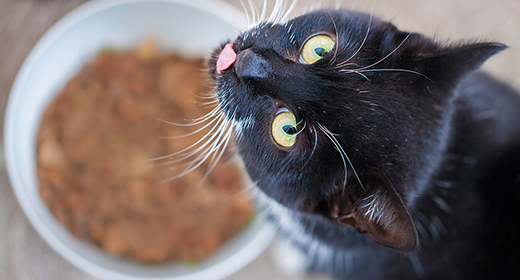
- Make food more appetizing. As cats age, their senses of smell and taste become less acute, so pet food manufacturers have developed senior cat food with intensified aromas and flavors. You can try to make your older cat's food more appealing by warming it to increase its smell (just be sure to stir it to eliminate any hot spots), or by adding bouillon or gravy. If your cat has dental problems, you can change the food's texture by blending or mashing it with water.