IAMS IN
cat-article-your-cat-overweight-underweight-or-just-right
cat-article-your-cat-overweight-underweight-or-just-right-mob

adp_description_block353
Is Your Cat Overweight, Underweight or Just Right?

  • Share

This article is part of a series on how to spot signs of a healthy cat. You can learn more about the key signs here.


Assessing your cat’s body condition is an important step in evaluating their overall nutritional well-being. Particularly in cases where your cat appears to be obese or thin, it is important to evaluate their total health before consulting a vet for a proper nutritional management program. Look for the following signs that your cat is overweight, underweight or just the right size.


thin cat i

underweight cat i

ideal weight cat i

overweight cat i

obese cat i


Thin Cat

  • Ribs, lumbar vertebrae and pelvic bones are easily visible
  • Thick neck and narrow waist
  • Obvious abdominal tuck
  • No fat in flank folds; folds are often absent

 Underweight Cat

  • Backbone and ribs can be easily seen or felt
  • Minimal fat covering
  • Minimal waist when viewed from above
  • Slightly tucked abdomen

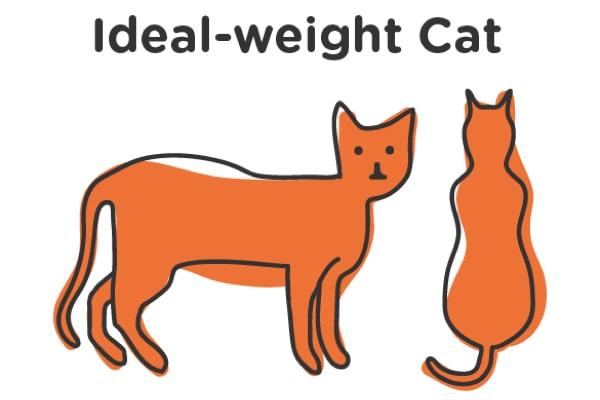
Ideal-weight Cat

  • Ribs are easily felt, but not visible
  • A slight waist can be seen behind the ribs when viewed from above
  • Abdomen is tucked up and flank folds are present

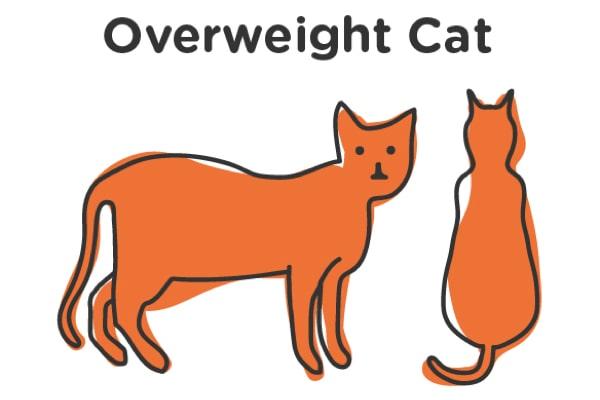
 Overweight Cat

  • Slight increase in fat over ribs, but still easily felt
  • Abdomen is slightly rounded and flanks are concave
  • Flank folds hang down with moderate amount of fat — you might notice a jiggle when your cat is walking

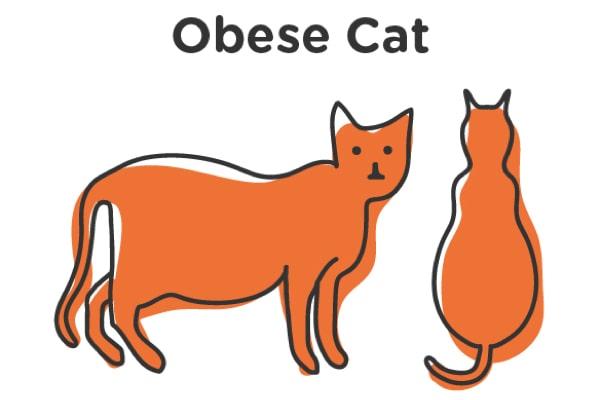
 Obese Cat

  • Ribs and backbone aren’t easily felt under a heavy fat covering
  • Abdomen is rounded; waist is barely visible or absent
  • Prominent flank folds sway from side to side when your cat is walking

  • How Sodium Is Used in Our Cat Foods
    How Sodium Is Used in Our Cat Foods
    adp_description_block312
    How Sodium Is Used in Our Cat Foods

    • Share

    Why should cat food have sodium in it? Sodium content in cat food has an important nutritional and dietary function, just like it does in your food! But it’s important to understand just what it does and how much of it is healthy. That way you can make the best possible decisions about what to feed your cat.


     What Is Sodium? Why Is Sodium Important for Cats?

    Sodium is an essential mineral for life. Inside the body it is found in the blood and in the fluid that surrounds cells. Sodium itself helps ensure proper nerve and muscle cell functions, maintains a healthy cellular environment and prevents cells from swelling or dehydrating. The sodium levels in IAMS™ cat foods are balanced with other minerals, vitamins, fats, proteins and carbohydrates. That way you can be sure your cat is getting enough for their health.


    Where Does Sodium Content in Cat Food Come from? 

    Meat, poultry, fish and eggs are all good natural sources of sodium, and are the primary ingredients in all IAMS™ cat foods including IAMS™ PROACTIVE HEALTH™ Healthy Adult.

    Sodium may also be included in commercial cat foods in the form of ordinary table salt. Salt is an important ingredient in making food more palatable for animals, as well as for people.


    How Much Sodium Can Cats Have Per Day? 

    The Association of American Feed Control Officials recommends that dry cat foods contain at least a minimum of 0.2%1 sodium — 0.2% of dry matter your cat eats, or 0.5 grams per 1,000 kcal — for maintenance and to support normal growth and development. While higher sodium intake may cause increased thirst, water consumption and urination, excess sodium is passed in the urine.


    Why Would a Vet Recommend More or Less Sodium? 

    A veterinarian may recommend changing your cat’s sodium intake to help decrease high blood pressure, eliminate excessive body fluid or as a precaution if kidney, liver or heart heath is a concern. You can keep track of your cat’s overall wellbeing at home if you regularly check their C.A.T.S. — Coat, Appetite, Temperament and Size — for any changes that might lead to questions for the vet.

    Healthy cats of all ages don’t normally require a low- or reduced-sodium diet, so be sure to talk to your vet about any sodium concerns you may have before making a change.

     Cats’ bodies work differently from our own, and learning to care for them is a process! What your cat eats impacts everything from their energy levels to their mood to the health of their skin and coat. By understanding what healthy cats and kittens need from their food, like sodium, antioxidants, fiber and more, you’re better able to give your cat a diet that helps them thrive.


Close modal