Enter a keyword below to search for articles and products.
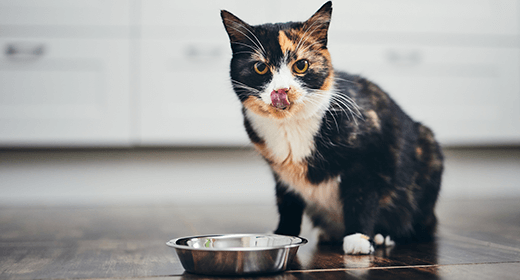
Cats are known for being a bit choosey about what they will and won’t do. And a little pickiness is fine when it comes to picking out toys and napping spots! But if your cat is or becomes extra-selective about what they’ll eat, it’s time to pay attention and perhaps talk to your vet. You and your vet know your cat best, so it’s always worth checking in if you think your cat isn’t eating enough and want their professional advice.
Start by paying close attention to what your cat is eating and how they behave. This information will help you, your household and your vet work together to make sure your cat is living and eating well.
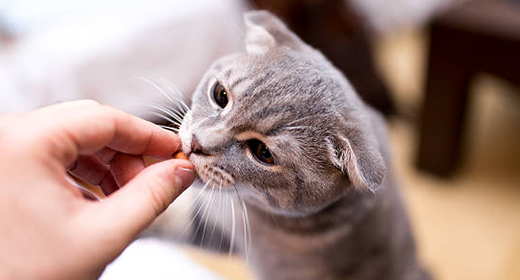
Is your cat begging for table scraps or holding out on eating until you offer treats? Extras like these can be very disruptive to your cat’s appetite and diet. Think about them like snacks or desserts for you — tasty cravings that are easy to fill up on. A small portion may not seem like much, but it can make a big different for a cat-sized digestive system!
Try dialing back how much you treat your cat to tasty extras and see if their interest in the food bowl starts to return. Remember, it’s generally all right for cats to skip a few meals, but if they haven’t eaten for 24-36 hours it’s time to call the vet (even if they’ve continued drinking water).
Humans often crave variety in their meals, but for cats, routine is king. It’s not likely they’d avoid their regular food out of boredom with it, but if you’ve recently changed the kind of food, the number of feedings or the times you feed your cat, they may be avoiding eating as a response.
It's a good idea to change your cat’s diet gradually (unless your vet advises otherwise). Pickiness can often be resolved by helping your cat adjust and get comfortable with their updated diet!
If your cat starts eating less, you may want to look for factors that could be causing stress. Seemingly unrelated changes to their environment can shift your cat’s stress levels enough to impact their interest in food. Has another animal or person joined or left the household? Has your cat been adapting to new surroundings due to a move or renovation? As the stress of that change begins to subside, your cat will probably go back to a normal diet.
Talk to your vet about good ideas for reducing your cat’s stress levels and share any concerns you have about their diet then too. You’re both on the same team, so work together to help your cat feel better!
Ethoxyquin is a synthetic antioxidant (artificially manufactured from other elements) that is approved for various uses. It is approved and regulated by the Food and Drug Administration (FDA) and the Association of American Feed Control Officials (AAFCO) for use as a preservative in animal feeds. Pet food manufacturers have been using ethoxyquin to prevent rancidity and maintain the nutritional quality of their products for more than 35 years.
Ethoxyquin remains stable at the high temperatures required to process pet foods during extrusion. It is important in protecting fats and oils from degrading, losing available calories, and becoming rancid.
Despite the fact that all studies conducted to date prove that ethoxyquin is safe for use in all animal foods when used at approved levels, rumors continue to circulate to the contrary.
Individuals who seek to discredit the use of ethoxyquin will often cite certain studies that showed toxic effects in animals fed ethoxyquin. What these individuals fail to point out is that the animals in these studies were given excessive amounts of ethoxyquin—20 to more than 50 times the maximum limit—before negative effects were exhibited.