Enter a keyword below to search for articles and products.
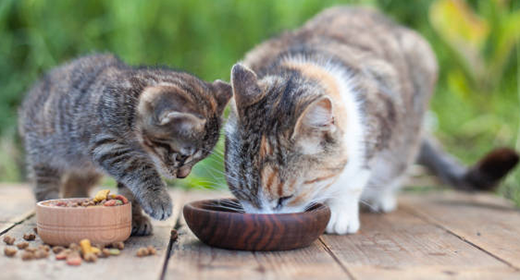
Our cat food products contain animal-based proteins that provide all the essential amino acid requirements for cats. In addition, special refining and quality assurance tests ensure that we only use high-quality, highly digestible protein sources for increased digestibility.
Cats, best fed as true carnivores, require essential nutrients that aren't found in plant proteins such as soybean meal. For example, cats require taurine, which can only be found in animal-based proteins.
There are two important types of fatty acids for cats, omega-6 and omega-3 fatty acids. Omega-6 fatty acids, found in chicken fat and corn, are essential for maintenance of skin and coat and proper membrane structure. Omega-3 fatty acids are found in ingredients such as canola, fish meal or fish oil, and flax. Omega-3 fatty acids have been shown to be important in blood clotting and in managing inflammation, among other things. All of our products contain sources of omega-6 and omega-3 fatty acids.
IAMS™ research has shown that including omega-6 and omega-3 fatty acids in a ratio between 5:1 to 10:1 provides for optimal skin and coat condition in dogs. All of our products contain an adjusted omega-6:omega-3 fatty acid ratio between 5:1 to 10:1.
IAMS research has shown that moderately fermentable fiber, such as beet pulp, enhances intestinal health. The fermentable part of the fiber is broken down by intestinal bacteria to provide short-chain fatty acids, an energy source for intestinal cells. The non-fermentable component provides bulk for normal feces.
Using only highly fermentable fibers can cause problems, such as excess gas, while using only non-fermentable fibers, such as peanut hulls, promotes excess stool volume, because they are of no nutritional value.
All of our products, including IAMS ProActive Health™ Adult Original with Chicken, contain a patented fiber system of moderately fermentable fiber to help keep dogs’ and cats’ digestive systems healthy.
Cat food labels provide limited information regarding the nutritional value of the package contents. It is important for customers to know what can and cannot be determined from the label, and what information is particularly important. Major components of a pet food label include:
Values in the guaranteed analysis are expressed as either minimum or maximum. A maximum guarantee (% max) means at most this specific amount of the nutrient is included in the formula. A minimum guarantee (% min) means at least this specific amount of the nutrient is included in the formula. The following four nutrients must be included on all pet food labels:
For example, a cat food with a 25% minimum crude protein guarantee should contain at least 25% protein, but could contain much more. The only way to determine the actual amount is by laboratory analysis.
Other information may be guaranteed on cat food products, such as magnesium (% max), taurine (% min), ash (% max), and linoleic acid (% min).
Ingredients must be listed in order of abundance (largest quantity listed first).
AAFCO nutritional adequacy statements are required on all pet foods. Products may either be formulated or tested according to AAFCO procedures and recommendations.
Veterinary-exclusive products include statements such as, 'This product is intended for intermittent feeding only' and 'Use only as directed by your veterinarian.'
Manufacturing codes allow the company to track products for quality and inventory issues. In order to quickly and efficiently handle a customer inquiry, the company's customer service department will usually ask the customer for this code.
Expiration or 'Best Used By' dates are optional, but are helpful in determining product freshness and shelf life.
The manufacturer's information should include the company name, address, and phone number so customers can quickly and easily obtain product information.
A toll-free telephone number should be provided as a convenience to the customer and to ensure that a charge is not incurred when calling for information.