Enter a keyword below to search for articles and products.
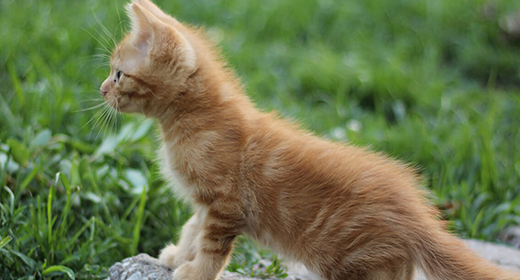
Kittens are curious, energetic fluffballs with boundless energy. A safe, enriching environment can cater to your kitten’s playful side, stimulate them physically and mentally, and benefit their health and development for the rest of their life.
Keeping your kitten indoors has significant benefits because it protects them from a large number of dangers. But without all the sights, sounds and smells of nature, a kitten needs other ways to stimulate their mind and body.
To build your kitten an enriching environment, provide them with safe places for hiding and resting, like window ledges, carriers or perches. Your kitten should feel protected in their safe spots and may prefer an enclosed resting area. While kittens spend a great deal of their time sleeping, their periods of wakefulness can and should be used to stimulate psychological and physical activity.
It’s important to create stimulating places for entertainment and play, as well. Cats can benefit from spaces at different vertical levels, like cat trees and perches. A variety of scratching posts can teach your kitten appropriate scratching while nurturing their natural instincts, and protect your furniture and carpet from their sharp claws.
Many cats also benefit from social activity with other cats, especially if they were introduced to other cats early in life. Providing your kitten with another kitten or young cat as a play buddy can help meet their need for near-constant play and motion. Keep in mind that cats put a premium on managing space, so it’s important that multiple-cat homes offer a variety of places to hide, sleep and observe, using both the horizontal and vertical dimensions.
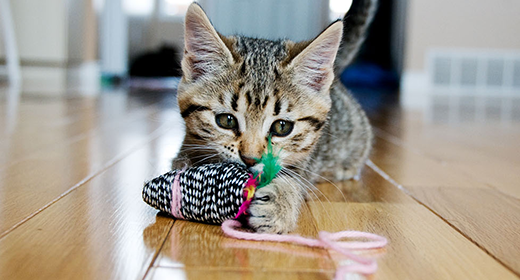
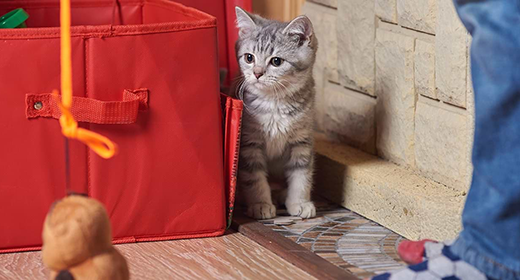
An important component to enriching your kitten’s environment is socialization and play, especially if your kitten is the only animal in the household. A kitten’s natural predator-play behavior is usually easy to stimulate with interactive toys, such as wand toys or balls to pounce on or chase.
Playing kitten games with your pet helps them develop coordination and natural hunting skills. It also can help them learn boundaries and develop a bond with their new owner. Aim for 10 to 15 minutes of structured playtime two or three times a day. One way to prevent the “nighttime crazies” is to engage in active, vigorous play before feeding your kitten at bedtime. This helps wear out the kitten before bed and mimics the natural hunting-feeding-grooming-sleeping sequence in cats.
Engaging games to play with your kitten include:
A greater challenge is providing enrichment opportunities for kittens when a person or another pet is not present to interact with them. Puzzle toys are one option to fight kitten boredom. These toys come in a variety of designs to entertain your kitten and reward her with a treat or food, such as IAMS™ Proactive Health™ Mother and Kitten. This offers twofold benefits, providing play and proper nutrition for supporting a kitten’s energy and playtime.
Kittens and cats will spend a great deal of time watching the outside world through windows, especially if there’s a bird feeder or butterfly garden within view. Make sure to keep at least one window blind open — especially if it looks out on an area with frequent movement and activity. There are also a number of “cat TV” videos of squirrels, birds and other nature scenes available online to keep a cat entertained.
Providing your kitten with enrichment opportunities helps prevent stress and the development of abnormal behaviors. Growing from a kitten into a cat in an enriched environment with lots of physical and psychological exercise supports the overall well-being of your pet at all stages of her life.
Antioxidants are good for your cat because they play a key role in minimizing damage to cells, including cells of the immune system.
These important, naturally occurring nutrients help maintain health by slowing the destructive oxidative process of cellular molecules. They also can be important in supporting immune responses and vaccine recognition in cats. This may be especially critical for kittens that are being vaccinated while their immune system is still developing.
Additionally, antioxidants can reverse decreases in immune-cell function for senior cats, increasing them back to healthy adult levels.
Antioxidants are nutrients found naturally in the body and in plants such as fruits and vegetables. Common antioxidants include vitamin C, vitamin E and certain compounds called carotenoids (including lutein and beta-carotene). A blend of several antioxidants in moderate amounts may be more effective than high levels of one antioxidant.
As cells function normally in the body, they produce damaged molecules called free radicals. These free radicals are highly unstable and steal components from other cellular molecules, such as fat, protein or DNA, thereby spreading the damage.
This damage continues in a chain reaction, and entire cells soon become damaged and die in a process called peroxidation. Peroxidation is useful because it helps the body destroy cells that have outlived their usefulness and kills germs and parasites. However, when left unchecked, peroxidation also destroys or damages healthy cells.
Antioxidants help prevent widespread cellular destruction by willingly donating components to stabilize free radicals. More importantly, antioxidants return to the surface of the cell to stabilize rather than damage other cellular components.
When there are not enough antioxidants to hold peroxidation in check, free radicals begin damaging healthy cells, which can lead to problems. For example, free radical damage to immune cells can lead to an increased risk of infection.
Because antioxidants play a key role in minimizing damage to cells, such as those that make up the immune system, recent research examined the benefits of certain antioxidants on the immune response of cats. The results of these studies indicated that antioxidants are important in helping cats maintain a healthy immune system.
The research also showed that each antioxidant benefits the immune system uniquely, so one antioxidant at high levels is not as effective as a group of antioxidants acting together.
Antioxidant | Source | Function |
Vitamin E | Plant oil extract, tocopherols | Optimizes immune system’s T-cell activation |
Beta-carotene | Vitamin premix, corn meal, chicken by-product meal and chicken fat | Optimizes types of cells present in the blood, increases antibody levels in the blood and optimizes vaccine recognition |
Recent research also examined the effect of aging on immune responses. The findings indicate that as cats age, immune cell responses may decline. Including antioxidants in your cat’s diet can help reverse the age-related decrease in immune cell function, returning it to healthy adult levels.