Enter a keyword below to search for articles and products.
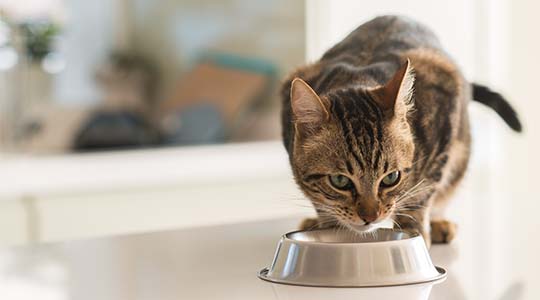
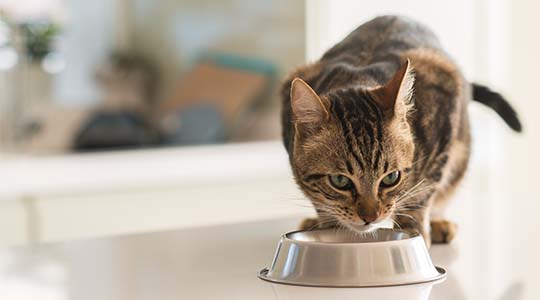
Why should cat food have sodium in it? Sodium content in cat food has an important nutritional and dietary function, just like it does in your food! But it’s important to understand just what it does and how much of it is healthy. That way you can make the best possible decisions about what to feed your cat.
Sodium is an essential mineral for life. Inside the body it is found in the blood and in the fluid that surrounds cells. Sodium itself helps ensure proper nerve and muscle cell functions, maintains a healthy cellular environment and prevents cells from swelling or dehydrating. The sodium levels in IAMS™ cat foods are balanced with other minerals, vitamins, fats, proteins and carbohydrates. That way you can be sure your cat is getting enough for their health.
Meat, poultry, fish and eggs are all good natural sources of sodium, and are the primary ingredients in all IAMS™ cat foods including IAMS™ PROACTIVE HEALTH™ Healthy Adult.
Sodium may also be included in commercial cat foods in the form of ordinary table salt. Salt is an important ingredient in making food more palatable for animals, as well as for people.
The Association of American Feed Control Officials recommends that dry cat foods contain at least a minimum of 0.2%1 sodium — 0.2% of dry matter your cat eats, or 0.5 grams per 1,000 kcal — for maintenance and to support normal growth and development. While higher sodium intake may cause increased thirst, water consumption and urination, excess sodium is passed in the urine.
A veterinarian may recommend changing your cat’s sodium intake to help decrease high blood pressure, eliminate excessive body fluid or as a precaution if kidney, liver or heart heath is a concern. You can keep track of your cat’s overall wellbeing at home if you regularly check their C.A.T.S. — Coat, Appetite, Temperament and Size — for any changes that might lead to questions for the vet.
Healthy cats of all ages don’t normally require a low- or reduced-sodium diet, so be sure to talk to your vet about any sodium concerns you may have before making a change.
Cats’ bodies work differently from our own, and learning to care for them is a process! What your cat eats impacts everything from their energy levels to their mood to the health of their skin and coat. By understanding what healthy cats and kittens need from their food, like sodium, antioxidants, fiber and more, you’re better able to give your cat a diet that helps them thrive.
Ethoxyquin is a synthetic antioxidant (artificially manufactured from other elements) that is approved for various uses. It is approved and regulated by the Food and Drug Administration (FDA) and the Association of American Feed Control Officials (AAFCO) for use as a preservative in animal feeds. Pet food manufacturers have been using ethoxyquin to prevent rancidity and maintain the nutritional quality of their products for more than 35 years.
Ethoxyquin remains stable at the high temperatures required to process pet foods during extrusion. It is important in protecting fats and oils from degrading, losing available calories, and becoming rancid.
Despite the fact that all studies conducted to date prove that ethoxyquin is safe for use in all animal foods when used at approved levels, rumors continue to circulate to the contrary.
Individuals who seek to discredit the use of ethoxyquin will often cite certain studies that showed toxic effects in animals fed ethoxyquin. What these individuals fail to point out is that the animals in these studies were given excessive amounts of ethoxyquin—20 to more than 50 times the maximum limit—before negative effects were exhibited.