Enter a keyword below to search for articles and products.
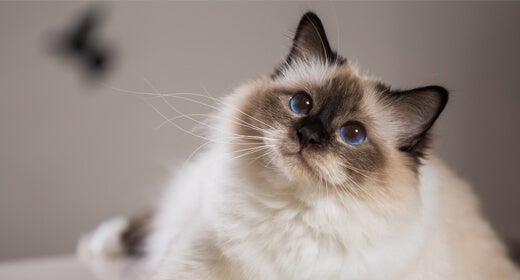
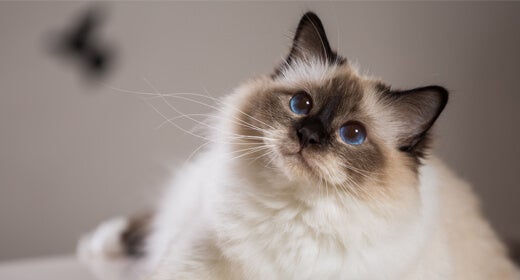
Your cat’s skin and coat help keep viruses and bacteria from entering the body and prevent water and heat from leaving it. And because nutrients such as protein, fat, vitamins and minerals play crucial roles in your cat’s skin and coat health, it’s important to make sure your cat is receiving the right types and amounts. IAMS™ cat foods are designed to provide your cat with the nutrition they need to support their skin and coat health.
Without Proper Nutrition
With Proper Nutrition
Your cat’s hair coat is composed almost entirely of protein. If your cat’s diet doesn’t contain enough quality protein, her hair may fall out or become dry, weak and brittle.
But not all proteins are alike. Proteins are found in both animal- and plant-based ingredients. Animal-based proteins contain all of the essential amino acids cats need, while plant-based proteins may contain only some. Cats need the nutrients in animal-based protein sources for the best health.
Fats also can be found in both animal- and plant-based ingredients, and are incorporated into skin cells as fatty acids. Three fatty acids help maintain your cat’s skin and coat condition:
Without these fatty acids, cats may experience a dull, dry coat, hair loss and greasy skin.
To promote your cat’s skin health and elasticity, make sure to provide clean, fresh water at all times.
Most cat foods contain more than the required amount of linoleic acid, an omega-6 fatty acid. However, IAMS research shows that it is not just the amount, but the ratio of omega-6 to omega-3 fatty acids that is most beneficial to cats.
The optimal omega-6 to omega-3 fatty acid ratio to maintain a healthy skin and coat in cats is between 5:1 and 10:1. In other words, five to 10 omega-6 fatty acids should be present for every one omega-3 fatty acid.
Vitamins and minerals are essential for the development of healthy skin and coat. The best way to provide them is through a complete and balanced diet rather than through supplements.
| Vitamin or Mineral | Role in Skin and Coat Health |
| Vitamin A | Necessary for growth and repair of skin |
| Vitamin E | An antioxidant that helps maintain the health of skin cells |
| Vitamin C | An antioxidant that helps maintain the health of skin cells |
| Biotin | Aids in the utilization of protein |
| Riboflavin (B2) | Necessary for fat and protein metabolism |
| Zinc | Necessary for fat and protein metabolism |
| Copper | Involved in tissue, pigment, and protein synthesis |
The protein, fatty acids, vitamins and minerals in your cat’s food all play a vital role in your cat’s skin condition and coat health. While other factors, including the season and your cat’s age, can also affect the health of your cat’s hair and skin, optimal nutrition can help support a shiny coat and healthy skin.
Our cat food products contain animal-based proteins that provide all the essential amino acid requirements for cats. In addition, special refining and quality assurance tests ensure that we only use high-quality, highly digestible protein sources for increased digestibility.
Cats, best fed as true carnivores, require essential nutrients that aren't found in plant proteins such as soybean meal. For example, cats require taurine, which can only be found in animal-based proteins.
There are two important types of fatty acids for cats, omega-6 and omega-3 fatty acids. Omega-6 fatty acids, found in chicken fat and corn, are essential for maintenance of skin and coat and proper membrane structure. Omega-3 fatty acids are found in ingredients such as canola, fish meal or fish oil, and flax. Omega-3 fatty acids have been shown to be important in blood clotting and in managing inflammation, among other things. All of our products contain sources of omega-6 and omega-3 fatty acids.
IAMS™ research has shown that including omega-6 and omega-3 fatty acids in a ratio between 5:1 to 10:1 provides for optimal skin and coat condition in dogs. All of our products contain an adjusted omega-6:omega-3 fatty acid ratio between 5:1 to 10:1.
IAMS research has shown that moderately fermentable fiber, such as beet pulp, enhances intestinal health. The fermentable part of the fiber is broken down by intestinal bacteria to provide short-chain fatty acids, an energy source for intestinal cells. The non-fermentable component provides bulk for normal feces.
Using only highly fermentable fibers can cause problems, such as excess gas, while using only non-fermentable fibers, such as peanut hulls, promotes excess stool volume, because they are of no nutritional value.
All of our products, including IAMS ProActive Health™ Adult Original with Chicken, contain a patented fiber system of moderately fermentable fiber to help keep dogs’ and cats’ digestive systems healthy.