Enter a keyword below to search for articles and products.
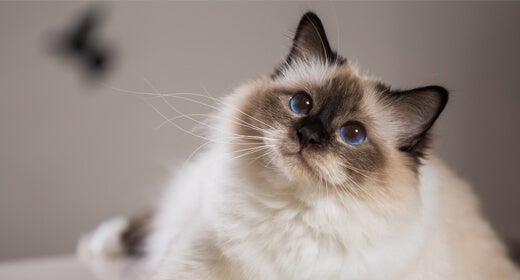
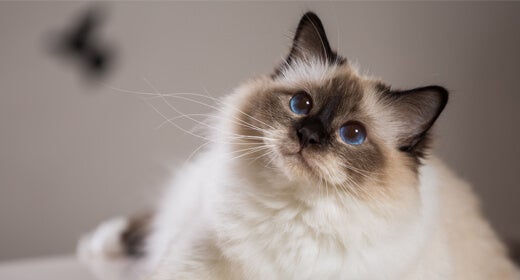
Your cat’s skin and coat help keep viruses and bacteria from entering the body and prevent water and heat from leaving it. And because nutrients such as protein, fat, vitamins and minerals play crucial roles in your cat’s skin and coat health, it’s important to make sure your cat is receiving the right types and amounts. IAMS™ cat foods are designed to provide your cat with the nutrition they need to support their skin and coat health.
Without Proper Nutrition
With Proper Nutrition
Your cat’s hair coat is composed almost entirely of protein. If your cat’s diet doesn’t contain enough quality protein, her hair may fall out or become dry, weak and brittle.
But not all proteins are alike. Proteins are found in both animal- and plant-based ingredients. Animal-based proteins contain all of the essential amino acids cats need, while plant-based proteins may contain only some. Cats need the nutrients in animal-based protein sources for the best health.
Fats also can be found in both animal- and plant-based ingredients, and are incorporated into skin cells as fatty acids. Three fatty acids help maintain your cat’s skin and coat condition:
Without these fatty acids, cats may experience a dull, dry coat, hair loss and greasy skin.
To promote your cat’s skin health and elasticity, make sure to provide clean, fresh water at all times.
Most cat foods contain more than the required amount of linoleic acid, an omega-6 fatty acid. However, IAMS research shows that it is not just the amount, but the ratio of omega-6 to omega-3 fatty acids that is most beneficial to cats.
The optimal omega-6 to omega-3 fatty acid ratio to maintain a healthy skin and coat in cats is between 5:1 and 10:1. In other words, five to 10 omega-6 fatty acids should be present for every one omega-3 fatty acid.
Vitamins and minerals are essential for the development of healthy skin and coat. The best way to provide them is through a complete and balanced diet rather than through supplements.
| Vitamin or Mineral | Role in Skin and Coat Health |
| Vitamin A | Necessary for growth and repair of skin |
| Vitamin E | An antioxidant that helps maintain the health of skin cells |
| Vitamin C | An antioxidant that helps maintain the health of skin cells |
| Biotin | Aids in the utilization of protein |
| Riboflavin (B2) | Necessary for fat and protein metabolism |
| Zinc | Necessary for fat and protein metabolism |
| Copper | Involved in tissue, pigment, and protein synthesis |
The protein, fatty acids, vitamins and minerals in your cat’s food all play a vital role in your cat’s skin condition and coat health. While other factors, including the season and your cat’s age, can also affect the health of your cat’s hair and skin, optimal nutrition can help support a shiny coat and healthy skin.
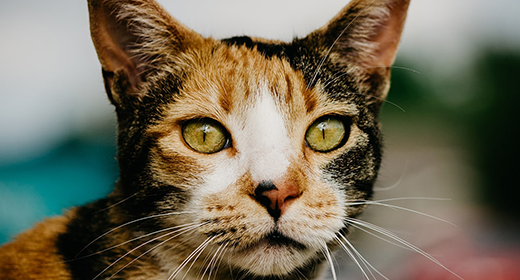
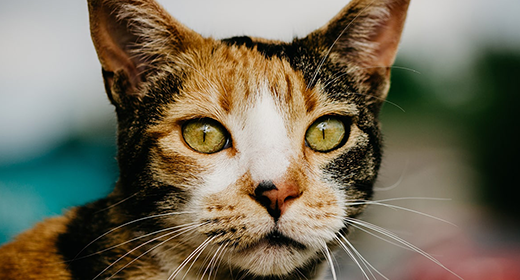
Antioxidants are good for your cat because they play a key role in minimizing damage to cells, including cells of the immune system.
These important, naturally occurring nutrients help maintain health by slowing the destructive oxidative process of cellular molecules. They also can be important in supporting immune responses and vaccine recognition in cats. This may be especially critical for kittens that are being vaccinated while their immune system is still developing.
Additionally, antioxidants can reverse decreases in immune-cell function for senior cats, increasing them back to healthy adult levels.
Antioxidants are nutrients found naturally in the body and in plants such as fruits and vegetables. Common antioxidants include vitamin C, vitamin E and certain compounds called carotenoids (including lutein and beta-carotene). A blend of several antioxidants in moderate amounts may be more effective than high levels of one antioxidant.
As cells function normally in the body, they produce damaged molecules called free radicals. These free radicals are highly unstable and steal components from other cellular molecules, such as fat, protein or DNA, thereby spreading the damage.
This damage continues in a chain reaction, and entire cells soon become damaged and die in a process called peroxidation. Peroxidation is useful because it helps the body destroy cells that have outlived their usefulness and kills germs and parasites. However, when left unchecked, peroxidation also destroys or damages healthy cells.
Antioxidants help prevent widespread cellular destruction by willingly donating components to stabilize free radicals. More importantly, antioxidants return to the surface of the cell to stabilize rather than damage other cellular components.
When there are not enough antioxidants to hold peroxidation in check, free radicals begin damaging healthy cells, which can lead to problems. For example, free radical damage to immune cells can lead to an increased risk of infection.
Because antioxidants play a key role in minimizing damage to cells, such as those that make up the immune system, recent research examined the benefits of certain antioxidants on the immune response of cats. The results of these studies indicated that antioxidants are important in helping cats maintain a healthy immune system.
The research also showed that each antioxidant benefits the immune system uniquely, so one antioxidant at high levels is not as effective as a group of antioxidants acting together.
Antioxidant | Source | Function |
Vitamin E | Plant oil extract, tocopherols | Optimizes immune system’s T-cell activation |
Beta-carotene | Vitamin premix, corn meal, chicken by-product meal and chicken fat | Optimizes types of cells present in the blood, increases antibody levels in the blood and optimizes vaccine recognition |
Recent research also examined the effect of aging on immune responses. The findings indicate that as cats age, immune cell responses may decline. Including antioxidants in your cat’s diet can help reverse the age-related decrease in immune cell function, returning it to healthy adult levels.