Enter a keyword below to search for articles and products.
An upset stomach is more common in cats than you might think. But how can you tell if it's a serious problem?
Every cat owner recognizes the warning signs of an upset feline stomach: the mournful meow, gagging, and heaving retch. But in a flash, the cat seems to snap back to good health while you're left scrubbing the carpet.
The scenario is a familiar one for Cynthia Bowen of Cleveland, Ohio. As the owner of four Maine Coons, Bowen has cleaned her share of messes. 'It would happen every couple of months or so,' she says. 'Otherwise, they were perfectly healthy.'
Although it's not a pleasant subject, vomiting is something cats seem to do almost on cue. Many cat owners accept this as a natural part of owning a pet, but it doesn't have to be that way. Knowing what triggers an upset stomach and what you can do about it will make for a better relationship with your cat.
Repeated cat vomiting should never be ignored because it can lead to dehydration. But, because vomiting is common in cats, how do you know what's normal? 'A general guideline is that if the cat is vomiting one to three times a month, we consider this 'normal,'' says Dr. William Folger, a DVM from Houston.
He considers it serious if the vomiting occurs twice daily for two or three days. If your cat stops eating, seems to have stomach pain, or retches continuously, or if there's blood in the vomit, take her to a veterinarian. And, as always, if you're suspicious that a lingering problem could be harmful to your pet, call your veterinarian. A visit to the office can help relieve your cat's discomfort and your worries as well.
Many owners attribute their cat's vomiting to hairballs, but that's not the only culprit. 'It's careless to assume that most cases of vomiting in cats are due to hairballs,' says Dr. Folger. Two other frequent causes of an upset stomach are:
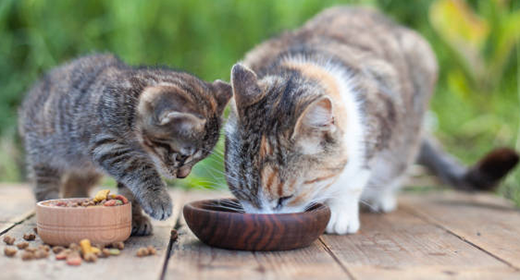
Eating too fast. Cats sometimes eat too much, too fast. When the stomach wall expands too quickly, a signal is sent to the brain to cause regurgitation. In these cases, the mess on your floor is from regurgitation, not actual vomiting. When a cat regurgitates, he brings up fluid and food from his esophagus by opening his mouth–unlike vomiting, where there's gagging and retching. Regurgitated food is still formed, and may smell fermented. 'Cats that eat too quickly because they are gluttonous or stressed by food bowl competition can regurgitate right after eating,' says Dr. Sara Stephens, a DVM from Montana. But don't assume regurgitation is always a case of eating too fast. It could be caused by esophageal problems, obstruction of the digestive tract, hairballs, or dehydration. If you've forced your cat to eat slowly and he still has problems, contact a veterinarian.
Curiosity. Grass, carpet, and toilet paper are just a few things cats may digest and later vomit. The vomiting is a protective mechanism–nature's way of cleansing your cat’s system. Sometimes, though, curiosity can lead to more serious problems. String, toy parts, and feathers are favorites of playful felines and can lodge in the stomach or intestine, causing repeated vomiting and severe distress. If your cat exhibits these symptoms, take her to a veterinarian immediately; surgery is often necessary to remove the object.
Often, owners accept their pet's vomiting as a natural part of their behavior, but just because cats seem to have more than their fair share of tummy troubles doesn't mean you have to sit idly by.
One simple preventative measure is to get your fast-eating cat to slow down or to simply eat less. Stephens recommends smaller portions, elevating your cat's food dish slightly, or putting an object, such as a ball, into the dish. The cat will be forced to eat around the ball, and thus her intake will be slowed. If you do this, make sure the ball isn't small enough to swallow. And you may need to feed cats in a multiple-cat household at different times and places to reduce competitive eating.
If simple solutions don't work, watch your cat's eating behavior and reactions. Bowen, for example, tried changing her cats' diets. 'Since switching to IAMS®, they rarely throw up,' Bowen says.
'Usually, when you change to a higher-quality diet, there is no problem,' Stephens says. Here are some tips for helping make sure your cat's change is as successful and comfortable as possible:
Go slowly. Make the transition gradually to allow your cat time to adjust. 'Make sure the cat eats something every day,' Stephens advises. 'A cat that quits eating suddenly can develop liver problems.'
Measure up. How much should you feed? Your cat's age, sex, breed, activity level, and overall health need to be taken into consideration. Talk with your veterinarian, then read the manufacturer's recommendations. Premium foods like IAMS cat foods are more nutrient-dense than many non-premium diets, so don't be surprised if the recommended amounts seem low.
Pay attention. Beyond careful measuring, also regularly weigh your cat and adjust the feeding amount accordingly after switching to a premium food. Your cat may appear happy if you overfeed him. But over time, he may become overweight. Tummy troubles can be in the past with your veterinarian’s help and a little effort on your part.
Cat food labels provide limited information regarding the nutritional value of the package contents. It is important for customers to know what can and cannot be determined from the label, and what information is particularly important. Major components of a pet food label include:
Values in the guaranteed analysis are expressed as either minimum or maximum. A maximum guarantee (% max) means at most this specific amount of the nutrient is included in the formula. A minimum guarantee (% min) means at least this specific amount of the nutrient is included in the formula. The following four nutrients must be included on all pet food labels:
For example, a cat food with a 25% minimum crude protein guarantee should contain at least 25% protein, but could contain much more. The only way to determine the actual amount is by laboratory analysis.
Other information may be guaranteed on cat food products, such as magnesium (% max), taurine (% min), ash (% max), and linoleic acid (% min).
Ingredients must be listed in order of abundance (largest quantity listed first).
AAFCO nutritional adequacy statements are required on all pet foods. Products may either be formulated or tested according to AAFCO procedures and recommendations.
Veterinary-exclusive products include statements such as, 'This product is intended for intermittent feeding only' and 'Use only as directed by your veterinarian.'
Manufacturing codes allow the company to track products for quality and inventory issues. In order to quickly and efficiently handle a customer inquiry, the company's customer service department will usually ask the customer for this code.
Expiration or 'Best Used By' dates are optional, but are helpful in determining product freshness and shelf life.
The manufacturer's information should include the company name, address, and phone number so customers can quickly and easily obtain product information.
A toll-free telephone number should be provided as a convenience to the customer and to ensure that a charge is not incurred when calling for information.