Enter a keyword below to search for articles and products.
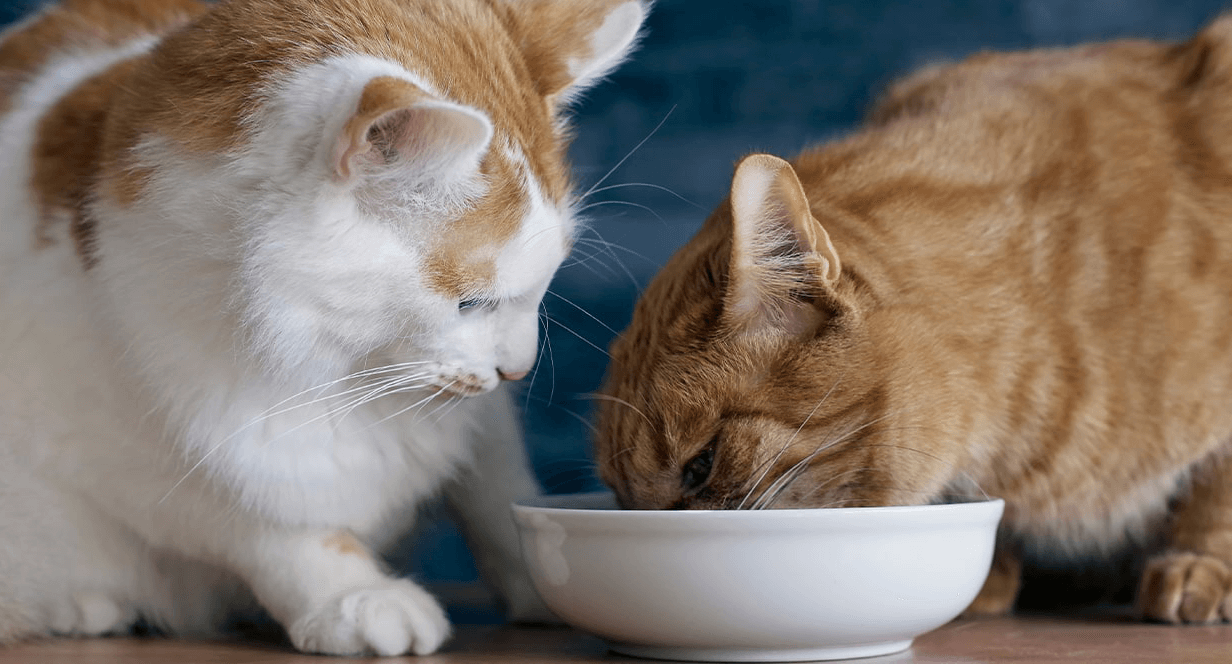
How can you make sure you’re feeding your cat the right food, at the right time and in the right quantities? If you’re choosing a new cat food, deciding on a feeding schedule or wondering about supplements or treats, check out our feeding guidelines for cats.
Life stage, lifestyle and overall condition all factor in to deciding which pet food is right for your cat. Life stage refers to whether your pet is a kitten, an adult or a senior. Lifestyle refers to how active or inactive your cat normally is. Condition refers to the cat’s overall health and body weight.
A practical guideline is that kittens should be fed three times a day from weaning (3 to 6 weeks) to 4 months of age. After 4 months, they should be fed twice a day. Most cats should continue to be fed twice a day throughout their life, although some pets do well with one feeding.
The amount to feed your cat depends on her age, size and activity level. Feeding guidelines, which list the daily-recommended portion, are included on all IAMS™ packages. Start feeding with this amount and adjust according to your pet’s needs. Remember to divide the portion accordingly if you feed more than once a day.
When changing your cat’s diet, it’s important to introduce the new food slowly. Start by offering your cat’s daily portion in a ratio of 25% new food to 75% old food. During the next three days, gradually increase the amount of new food and decrease the amount of old.
Wet food is an excellent treat that can be fed alone or mixed with dry food. Our dry foods are formulated with high-quality protein sources such as chicken, lamb or fish and contain all the essential nutrients pets need. The crunchy texture of dry food also promotes healthy teeth and gums, and provides overall good oral hygiene.
No — boredom with food is a human trait. Cats are creatures of habit and usually are content with just one food. Cats generally eat to meet their energy or nutritional needs. They have very short digestive systems, and if their diet is abruptly or constantly changed, digestive disturbances can occur. Also, constant changes can make your pet a finicky eater.
Adding water will not change the nutritional value of dry cat food. However, once moisture is added the food should be eaten relatively soon, and any uneaten portion should be discarded to avoid spoilage. Feeding your cat dry food is usually encouraged because of the benefit to your cat’s dental health.
Cats and dogs have different nutritional requirements and should not eat each other’s food. For example, cats require a much higher level of taurine in their diet. An occasional venture into each other’s bowls will not be harmful, but is not recommended on a regular basis.
Our foods are nutritionally complete and balanced. Adding vitamins, minerals or oils can offset the balance the food provides. One of the benefits of feeding a high-quality product is that it has been carefully balanced in proper ratios to provide optimal nutrition, so nothing needs to be added.
As a cat owner, you know a few things for certain: that cats are wonderful and amazing creatures, that nothing beats a purring cat on a warm lap, and that one day, sadly, your cat will leave you for good. Realizing that your cat is nearing the end of their life is never easy, but hopefully these tips and insights will help you navigate through this emotional, often painful process.
Letting your cat go is the most difficult decision a pet owner has to make. Like people, cats’ bodies eventually begin to decline due to age. To help you make the most informed decision for your cat, here are some signs it may be time to say farewell:
As you weigh your options, make sure to reach out to your vet, as well as friends or family who have lost a pet:
While you won’t be able to prevent their eventual departure, you can still ensure your cat’s final days are comfortable and full of love.
Take extra time to remind your cat of how much they mean to you. Give them extra ear skritches and cuddles, and say anything you want to tell them.
Older cats tend to be thin, making it harder for them to stay warm. Make sure they’re able to catnap in toasty areas: near heating vents, in a sunny spot or a cozy cat bed, or — their favorite — your lap.
Your senior cat isn’t as athletic as they once were, so give them an assist with steps or ramps so they can still hang out in their favorite elevated places. Also make sure they can easily get to the litter box. Getting a lower-sided box or putting one on every floor of your home helps reduce the risk of accidents.
Cats of a certain age have more difficulty grooming themselves. You can help by gently brushing them more often and clipping their nails. This not only keeps them looking as beautiful as ever, but is also a great way to spend some quality time together.
Cats are creatures of habit, so now is not the time to make any drastic changes in their routine or introduce a new pet to the household. They love the life you’ve created for them and will be more relaxed if their established routines continue uninterrupted.
Allowing family members — including other pets — a chance to say farewell will go a long way toward easing their grief. Be very clear about your decision so everyone knows you have your cat’s best interests at heart.
It’s OK to feel sad when a beloved cat moves on to the big catnip field in the sky. Pets are members of the family, after all! Don’t be afraid or ashamed to grieve your loss. To help ease those feelings, try some of these suggestions.
Your pet may have passed, but all of those wonderful memories are yours forever. That cute thing they did with their head, their funny meow, how they always insisted on sitting on your computer … don’t be afraid to reminisce and enjoy those memories.
Some people find holding a memorial provides a sense of closure and pays tribute to everything their pet meant to them. Cremation is common with pets, so you can put their remains somewhere on your property where they’ll be close. Feel free to make a speech or raise a toast — whatever you want to honor their memory.
There are a number of ways you can keep your cat’s presence around your place to help evoke happy memories. Many vet offices offer to make an impression of your cat’s pawprint in clay as a keepsake. Maybe you’d like to hang some pictures or keep their collar or favorite toy on a bedside table. Even more important is the fact that all those memories will live on forever in your heart.